Home » Posts filed under History Taking
- The 1st complaint in any obstetric case should be cessation of menstruation since the last normal menstrual period (LNMP).
- This is followed by the main complaint (s) that brings the patient to hospital.
- Use patient own words
- Arranged in chronologically if the complaint is more than one.
Obstetric History:
Past History
Family History
Present history
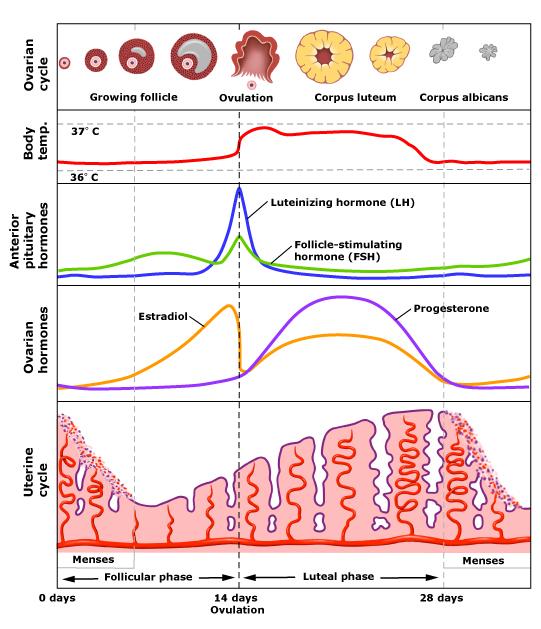
The items of menstrual history include the following items in sequence:
- [1] Menarche- it is the 1st menses in the woman's life. Normal age is between 9-16.
Precocious puberty: earlier than 9 years old
Delayed puberty: later than 16 years old
- [2] Cycle rhythm- whether the menses occur in regular or irregular period of time.
- [3] Cycle length- it is the duration from 1st day to the next 1st day of menses cycle. Normal cycle length ranges from 21 to 35 days.
<21 days - polymenorrhea
>35 days - oligomenorrhea
- [4] Duration of menstrual flow- It is the period of time during which the menstrual blood flow through the vagina. Normal duration of menstrual flow ranges from 2-7 days.
Menorrhagia: prolonged >7 days and/or 80cc occurring at regular intervals = hypermenorrhoea
Metrorrhagia: irregular uterine bleeding not related to menstruation
Menometrorrhagia: prolonged uterine bleeding occurring at irregular intervals
Polymenorrhagia: frequent heavy/ prolonged menstruation
Postmenopausal bleeding: irregular vaginal bleeding following menopausal cessation of menstruation by 1 year
Intermenstrual bleeding: irregular vaginal bleeding in between regular normal menstruation = breakthrough bleeding
Contact bleeding: irregular vaginal bleeding following tissue contact (examination/intercourse)
- [5] Character of flow- it is regarding the amount, colour and odour of the blood. Normal amount is not more than 80 ml of the total volume. Normal colour of mense blood is dark red.
Excessive flow- indicated by present of clots
Bright red- may indicate excessive flow especially if associated with clots
Polymenorrhea: frequent menstruation occurring at regular intervals (<21 days)
Oligomenorrhoea: infrequent menstruation varying between 35 days and 6 months
Hypomenorrhoea: scanty regular menstruation (<20 ml)
Amenorrhoea: absence of menses for 3 successive regular cycles or 6 months
- [6] Dysmenorrhea- It is pain related to menses. It is severe enough to prevent the woman from doing her daily activities. Dysmenorrhea may be primary or secondary. The tolerable pain at menses is called 'menstrual molimina'.
Primary (spasmodic) dysmenorrhoea
Secondary (congestive) dysmenorrhoea
Special types of dysmenorrhoea
- [7] Intermenstrual Period (IMP)- It is the period from the last day of flow to the next 1st day of flow. Abnormal pain, bleeding or discharge may be presence or absence.
Normally ovulation may cause pain (Mittleschmerz's pain), bleeding (ovulation spotting) or increase of vaginal discharge (ovulation cascade).
- [8] Last Normal Menstrual Period (LNMP)- The 1st day of the last normal menstrual period should be asked for. To certain that the last menstrual period was normal it should fulfill the following criteria:
- It should be normal characters
- It should be preceded by 3 consecutive normal cycles
- It should not be preceded by the use of hormonal contraceptive
NB- The expected date of delivery (EDD) is calculated & mentioned before.
- [9] Current use of contraceptive- It should be mentioned here if it is currently used. The type of contraceptive method and the duration of its use should be asked.
The items of personal history includes the following:
- Name- It is important to know well the patient in order to call and to ask during history taking. It is also crucial to be familiar with the patient for smooth and easy discussion. Besides, it is for registration purposes.
- Age- It is important to know the patients age, as some group of ages may be a risk factor of certain diseases and to exclude them. It is also important to approach the diagnosis.
Case | Significance conditions related to age |
Cardiology |
|
Respiratory |
|
Hematology |
|
Gasteroenterology |
|
Nephrology |
|
Urology |
|
Internal Medicine |
|
Surgery |
|
Pediatric |
|
Obstetric | Childbearing period (16 - 39 years). High risk pregnancy are considered in elderly primigravida (>35 years), youg primigravida (<16 years) & grand multipara (>para 5). |
Gynecology | Precocious puberty (<8 years), Primary amenorrhoea/Delayed puberty/Dysfunctional uterine bleeding (DUB) (>16years). Child bearing period (16 - 40 years)- pregnancy complication, infertility, genital infection & fibroid. Perimenopause (45 - 55 years)- DUB, tumors (benign & malignant). Post menopause- malignancy & estrogen-deficiency sequelae. |
- Residence- Some area are endemic or predispose of certain disease. The patient may be live in a rural area or in an urban area which are may be highly predispose with certain microorganisms. This will be of value for diagnosis of some diseases. Besides, it is also value in follow up the patient if health-care is needed to go to their place.
- Occupation- Some jobs expose the patient to various hazards (infections, anesthetic drugs, ionizing radiation, pesticides, heavy metals). It is also gives information about the nature of physical, mental and social stress that may influence the patient. It also give idea about the family income and hence the socio-economic standard.
- Marital Status-
- Number of Offspring-
- Special Habits- There are 3 main special habits that are harmful to the patients:
Case | Smoking | Alcohol | Drug Abuse |
Cardiology |
|
|
|
Respiratory |
|
|
|
Hematology |
|
|
|
Gastroenterology |
|
|
|
Nephrology |
|
|
|
Urology |
|
|
|
Internal Medicine |
|
|
|
Surgery |
|
|
|
Pediatric |
|
|
|
Obstetric | Intrauterine growth retardation (IUGR) | Fetal alcohol syndrome with a number of fetal anomalies | Opioid addiction- Neonatal withdrawal syndrome |
Gynecology | Cervical neoplasm, protective effect against endometrial carcinoma |
|
|
- Personal History of Husband




.png)